In what is coming as a shocking development in the Iran, Israel, and US conflict, there are reports and claims circulating that the Iranian president has stated that he is not in charge of the country anymore and that the constitutional structure of the country has failed.
According to various media reports and circulating social media discussions, it is being said that he has been cut off from the loop of the government and is no longer being consulted in any of the processes or retaliation by the Iranian side. He is being described as a person with no real authority over his own jurisdiction.
Some reports also suggest that he has communicated to counterparts in countries like Russia and Qatar that he is no longer in control and that the constitutional setup has broken down. However, these claims remain unverified and should be seen with caution.
If the President Has No Authority, Then Who Is Running Iran?
In such a scenario, the main question remains: who has power in Iran and who is giving the orders?
Even as Iran has been at the receiving end of military initiatives from Israel and the U.S., and there are claims that parts of its leadership structure have been weakened, the country has not collapsed.
So, who is actually running Iran and conducting this war?
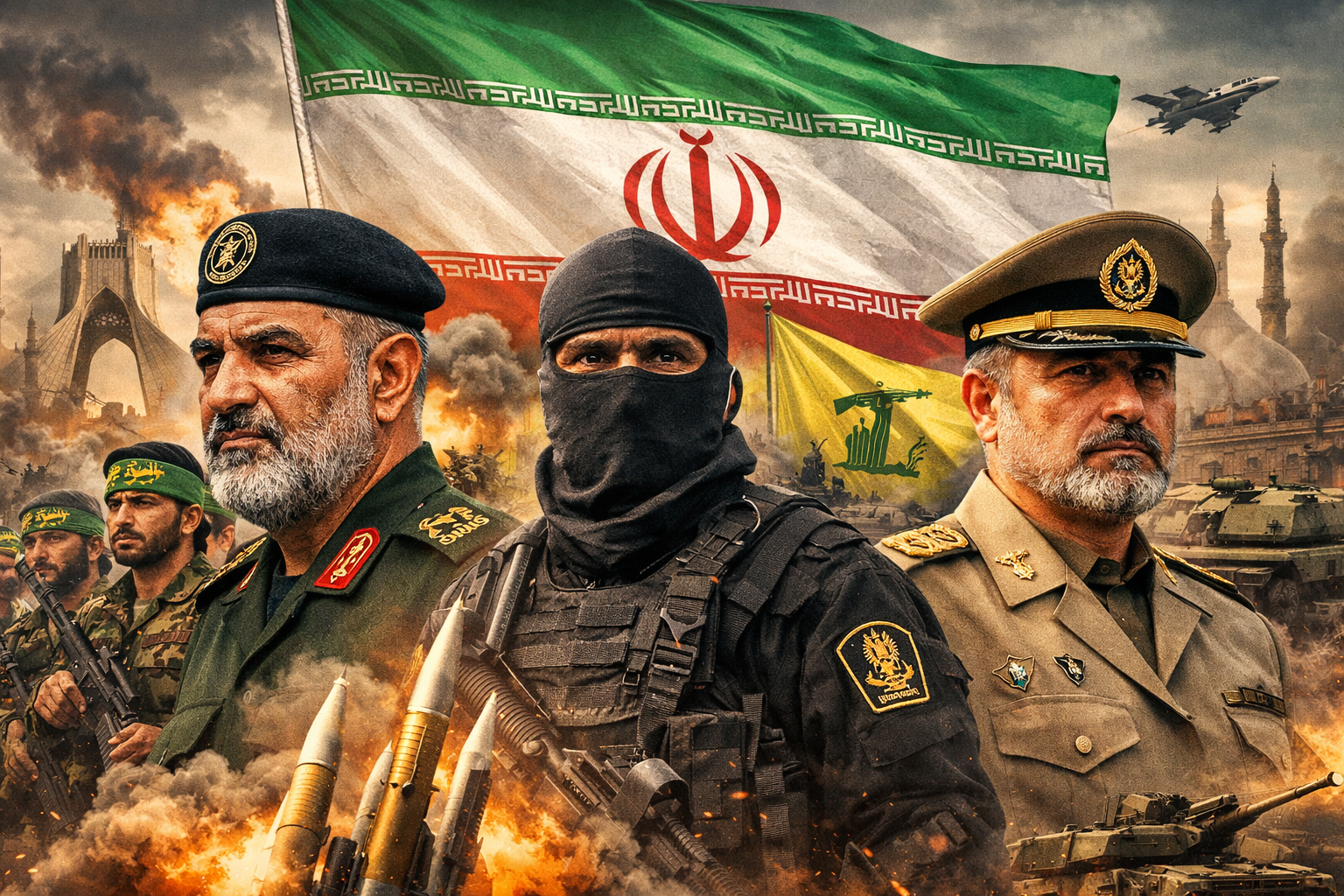
The answer lies in three major organizations that continue to hold authority and control.
1. IRGC – The Most Hardline Institution in Iran
The Islamic Revolutionary Guard Corps is the most hardline institution of Iran.
It was created in 1979 to ensure that the Islamic nature of its polity remains the same and that no one interferes in the Islamic nature of the country.
- It operates as a full military force with various units
- It has its own land, naval, and air capabilities
- It is one of the most economically influential military institutions in Iran
Recently, there have been discussions that hardliners within the IRGC were in dispute with the Iranian president, especially when he appeared to take a softer stance and even expressed regret over certain regional developments. This created a possible backlash from hardliners within the government and the country.
The IRGC, being the most hardline organization, was said to be in conflict with its own president.
2. Quds Force – The Foreign Operational Arm
The Quds Force is nothing but the foreign operational arm of the IRGC.
- It maintains alliances with Hezbollah, Hamas, and Houthis
- It is active in regions like Iraq and Syria
- It coordinates with militant and allied groups across the region
The Quds Force plays a major role in shaping Iran’s external strategy and ensures that its influence continues beyond its borders.
3. Artesh – The Regular Army of Iran
The Islamic Republic of Iran Army, also known as the regular army, is more command-style and traditional in nature.
- It lays less emphasis on Islamic identity
- It focuses more on conventional military power
- It has jurisdiction over Iran’s territorial defense
Although the number of troops is lesser compared to the IRGC and it does not have as much political and economic influence, it is still a force to reckon with.
Why Iran Is Still Functioning Despite Internal Strain
Even if there are internal disagreements or claims of weakened political leadership, Iran’s system is structured in a way where real power is distributed among strong institutions aligned with the Supreme Leader of Iran.
This is why the country continues to function and respond militarily, even during times of internal strain or uncertainty.
Conclusion: Real Power Lies Beyond the President
The situation highlights an important reality: in Iran, real power does not rest only with the president.
The IRGC, its Quds Force, and the Artesh together ensure that the country’s military and strategic direction continues. These institutions remain the backbone of Iran’s power structure and are central to understanding who actually runs the country.
FAQs
Q1. Is the Iranian president not in control anymore?
There are reports and claims suggesting this, but they are not fully verified. However, in Iran, the president does not have complete control over military decisions.
Q2. Who has the real power in Iran?
Power mainly lies with institutions like the IRGC and leadership connected to the Supreme Leader, rather than the president alone.
Q3. Why is Iran not collapsing even after internal conflict and leadership issues?
Iran is not collapsing because its system does not depend only on one leader. Strong institutions like the Islamic Revolutionary Guard Corps, the Quds Force, and the Islamic Republic of Iran Army continue to function and maintain control, which keeps the country stable even during internal tensions.
Abhinay Shukla is the founder of TheIndicWay, covering geopolitics, Indian culture, and global affairs. He writes sharp, insight-driven analysis focused on how international events impact India and its future.