Introduction: India as a Peace Broker in Global Conflict
What comes as a affirmation of the views of Indic Way, ever since the starting of this war between Iran and Israel and USA, we have always maintained that India is the only country that has the capability to broker peace between Iran, Israel, and America. India is one of the most important countries of this region, especially in the context of the Middle East conflict and Southeast Asia. It is one of the largest democracies and the most important voice and preacher of peace in this region.
Global Support for India’s Peace Mediation Role
Finland’s President Alexander Stubb has also announced and urged India to take on the peace negotiation and try to broker a peace deal between Iran, Israel, and the USA. He believes India is the only country fit to initiate such peace proceedings, as India is seen as the only stable democracy in the region amid rising geopolitical tensions.
Rising Conflicts and Instability in the Region
There is already an ongoing conflict between Afghanistan and Pakistan, adding to the instability in the region. Recently, Pakistan had strike down Afghanistan’s mental institution, killing around 400–500 people in a single strike. These wars are making the whole region unstable. Damaging the economy, affecting trade, and slowing overall progress and prosperity.
India’s Diplomatic Victory: Strait of Hormuz Breakthrough
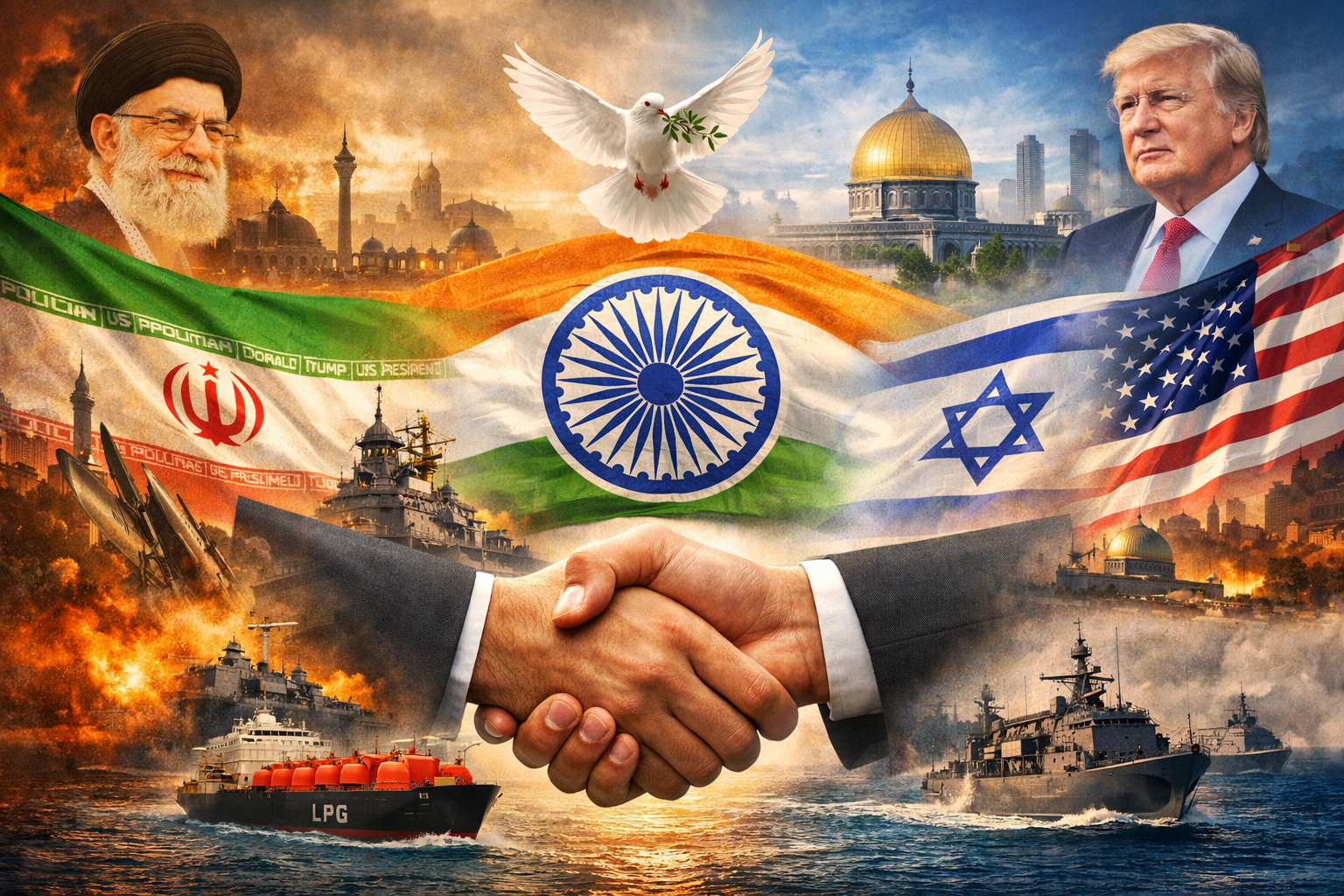
Recently, India surprised the whole world because, as we all know, the Strait of Hormuz was closed by Iran during the ongoing Iran-Israel war crisis. India made a historic and bold statement globally by successfully bringing two container ships full of LPG into India by passing through the Strait of Hormuz. This was possible due to special clearance from the Iranian government.
This incident clearly shows the diplomatic strength of India and its growing role in the Middle East conflict. It also reflects the confidence of Iranian authorities in India’s leadership and their informal acceptance of India’s role in peace mediation.
America’s Position in the Crisis and Oil Supply Concerns
America’s position in this crisis, especially with respect to the closure of the Strait of Hormuz, has been somewhat confusing. On one side, the Donald Trump administration has announced more strikes, but on the other hand, they have softened their stance on the closure of the Strait of Hormuz.
The Trump administration wants to fight the shortage of LPG and petroleum products and may soften its stance on the Strait of Hormuz with Iran as well. However, at the same time, they are somewhat disappointed with the outcomes of this war and the attitude of Iran towards dialogue.
The Americans feel that Iran should hoist the white flag and come forward in peace and in good faith, while the Iranians are, needless to say, in support of further resistance to American and Israeli military actions. They believe these strikes are unjustified, and the killing of Supreme Leader Ali Khamenei was a major blow to peace dialogues which were already happening backstage involving Iran.
Why India Stands Out in Middle East Diplomacy
India is the only country which is undisturbed by all this happening in its own backyard, apart from China. However, China has shown a soft corner towards Iran, which creates trust issues for Western countries. This makes India the only strong and neutral option for Western democracies to rely on for peace negotiations.
India’s balanced foreign policy in the Iran-Israel-USA conflict strengthens its position in global diplomacy and international relations strategy.
India’s Neutral Image and Global Trust
India is deeply respected by Iran, its people, Israel, and America. All three stakeholders in this war see India as a non-partisan country and view India as a friend, guide, and philosopher. This unique position increases India’s importance in global peace diplomacy and mediation efforts.
India’s Official Stand on the Crisis
India has officially stated through the Ministry of External Affairs that peace and the welfare of citizens remain its primary concern. India is closely watching the situation with deep concern for human lives and continues to support stability in the region.
Conclusion: Can India Mediate the Iran-Israel Conflict?
So it is not too far-fetched to think that India has a lot to offer to Iran, while also offering strong diplomatic balance to Israel and the USA. India is one country that is not looking to gain any benefit from this war but is focused on peace, stability, and the progress of people in the region.
With its strong diplomatic relations, neutral stance, and global trust, India’s role in the Middle East conflict could become crucial in shaping future peace negotiations between Iran, Israel, and the USA.
FAQs
1. Can India really broker peace between Iran, Israel and the USA?
Yes, India is one of the few countries that has strong diplomatic relations with all three sides—Iran, Israel, and the USA. Because India is seen as a neutral and non-partisan country, it has the capability to act as a peace broker in the Iran-Israel conflict and support global peace diplomacy.
2. Why is the Strait of Hormuz important in this conflict?
The Strait of Hormuz is one of the most important global oil routes, and its closure directly affects the supply of LPG and petroleum products worldwide. This is why countries like the USA and India are highly concerned, as it impacts global trade, energy security, and economic stability.
3. Why do Iran and other countries trust India’s role in mediation?
Iran, Israel, and the USA see India as a balanced and responsible global power that is not looking to gain from the war. India’s foreign policy, diplomatic approach, and focus on peace and stability make it a trusted partner in mediation and international conflict resolution.
Abhinay Shukla is a content writer and researcher focused on geopolitics, global conflicts, and international relations. He writes in a clear and grounded style, breaking down complex global issues like the Iran-Israel conflict, India’s foreign policy, and Middle East tensions into simple, informative insights for readers. His work aims to inform, analyze, and present India’s perspective on global affairs.