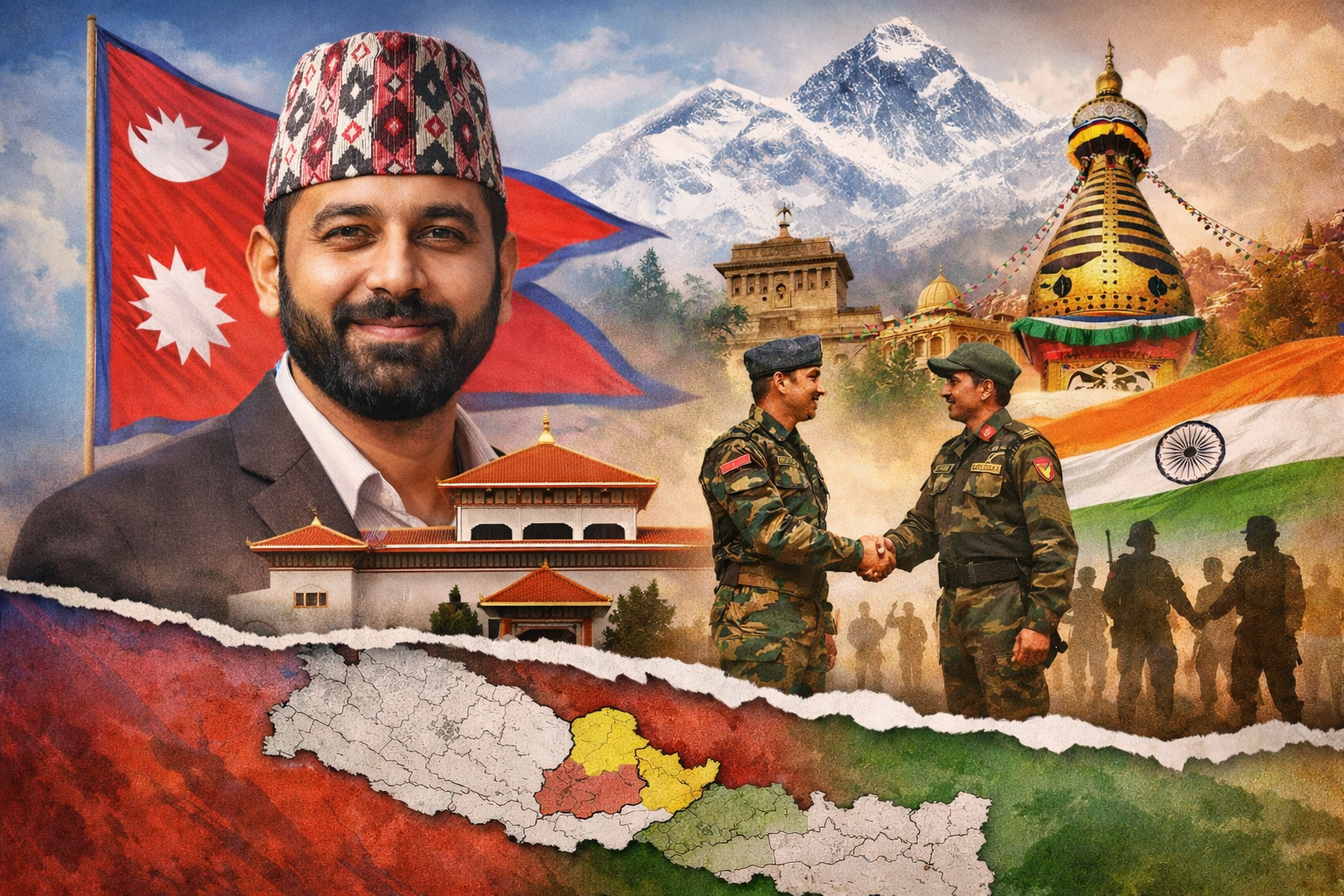
Former rapper and one of the most visible spokesmen of the Gen Z revolution that happened in Nepal in the year 2025 against the establishment and the Communist Party-led government, Balen Shah has served as the Mayor of Kathmandu.
Most recently, his party, the Rastriya Swatantra Party (RSP), secured a massive landslide victory in the general election that took place last week in Nepal.
Balen Shah is now on the way to becoming the Prime Minister of Nepal. He currently holds the landslide majority required in the parliament of Nepal.
Nepal follows a two-system electoral format. Because of this system, it is usually very difficult for a single party to attain a clear majority. However, the RSP has defied all conventions. It has emerged as the single largest party, garnering a large number of votes and seats.
A Giant Killer in Nepal’s Politics
Balen Shah is considered a giant killer in Nepal’s politics. This is because he defeated the former Prime Minister of Nepal, K. P. Sharma Oli, in the Jhapa-5 constituency.
This constituency has long been considered a political bastion of Oli. Therefore, defeating him in his stronghold is one of the most striking features of this election.
This result clearly shows the popularity and strong connection Balen Shah has among the general population of Nepal.
He has also been a leading figure in the Gen Z revolution that happened last year. During that time, the younger generation of Nepal supported him and looked up to him as an alternative path in politics.
The Rastriya Swatantra Party has provided that alternative in Nepal’s politics. For decades, the political system had been dominated by the Communist Party and its traditional leadership.
India’s Concerns About Nepal
Nepal is one of the most important neighbours of India. It is also one of India’s key trade partners. In addition, the cultural and social connections between the people of India and Nepal are massive.
In many ways, the people of India and Nepal are connected almost like twin siblings.
India–Nepal Relations: Three Key Dimensions
India’s connection with Nepal can be divided into three important aspects:
- Diplomatic relations between New Delhi and Kathmandu
- Cultural and social ties between the people of Nepal and India
- Military collaboration between the two nations
Diplomatic Relations Between New Delhi and Kathmandu
The diplomatic connection between New Delhi and Kathmandu has historically been very important for both countries.
Nepal shares an open border with India. Because of this, political developments in Kathmandu are closely watched by New Delhi. Any major political shift in Nepal therefore attracts the attention of Indian policymakers.
Cultural and Social Connections
The cultural and social ties between the people of Nepal and India are extremely deep and unique.
People from Nepal often come to India in large numbers to find employment. At the same time, Indian tourists and pilgrims regularly visit Nepal for tourism and religious purposes.
People-to-people relationships between the two nations are therefore very strong. Many families have relatives on both sides of the border. In addition, matrimonial relationships between Indian and Nepali families are also common.
This kind of connection is one of the most unique and striking features of the India-Nepal relationship.
Military Collaboration Between the Two Nations
There is also strong military collaboration between the two countries.
The General of the Indian Army and his counterpart in the Nepali Army are traditionally recognized as honorary generals in each other’s armies.
This tradition reflects the deep trust and strategic partnership between the two neighbours.
Challenges in India–Nepal Relations
While the relationship is strong, there are also certain contradictions and challenges.
For example, there is a territorial dispute between India and Nepal, especially over some areas near the Uttarakhand border. In addition, there are occasional disagreements related to trade and political issues.
However, despite these challenges, the strong people-to-people connection between the citizens of both countries usually outweighs these differences.
What Balen Shah’s Rise Means for India
Any positive political development in Nepal is generally good news for New Delhi.
The recent general election, in which Balen Shah emerged as a strong and popular contender for the post of Prime Minister, indicates political change and democratic energy in Nepal.
New Delhi will likely watch this development with interest. At the same time, it will hope that political stability and democratic strength in Nepal continue to grow.
Abhinay Shukla is a writer covering global politics, culture, and trending international developments. He focuses on explaining major world events and geopolitical issues in a clear and accessible way for readers.