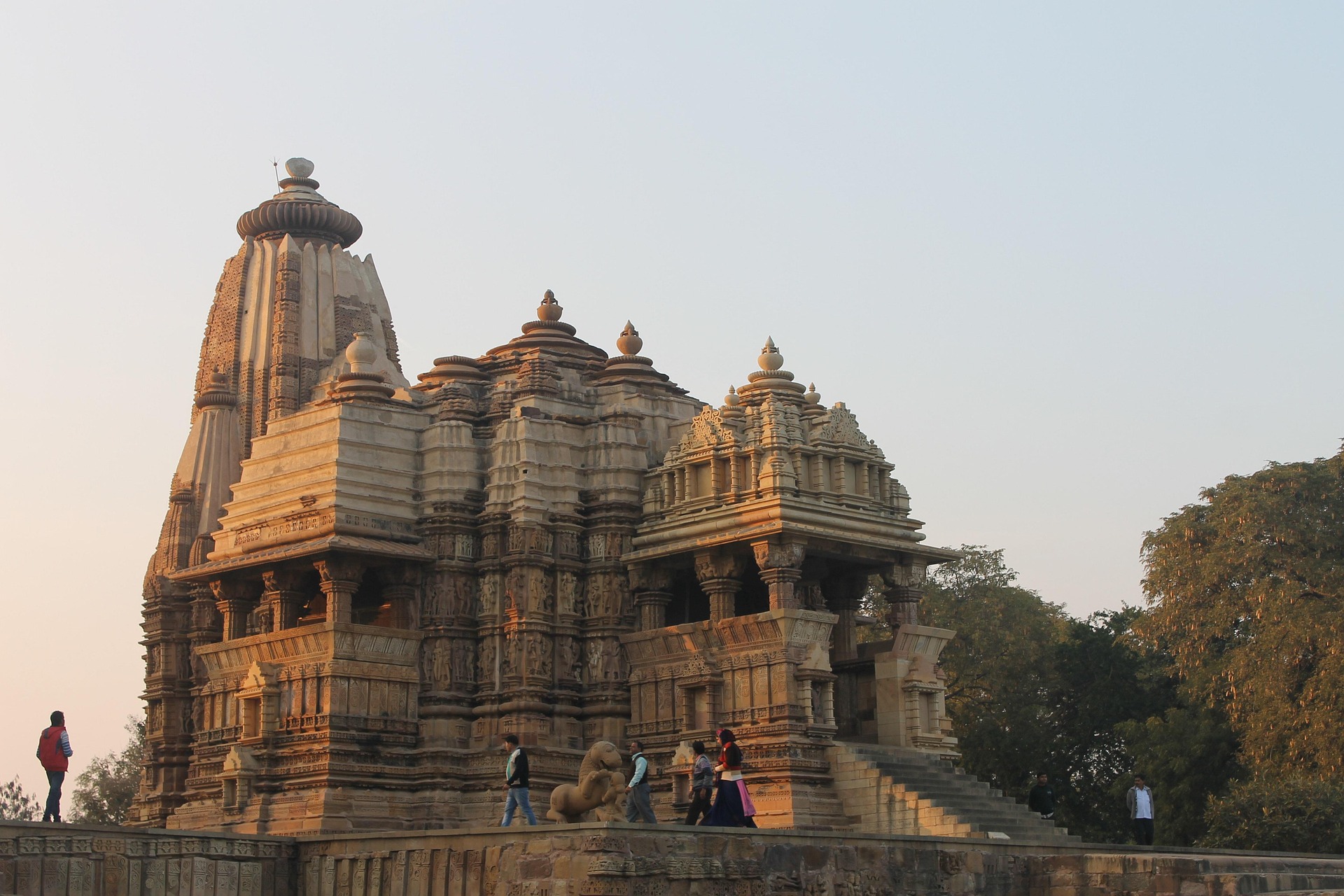
People across the globe are mesmerized by the architectural design of ancient Hindu temples. The towering Vimana (main building), high ceiling halls, platforms, carved walls, etc., have always been a matter of surprise for the West.
Hindu temples are not just buildings but a living sentiment where the chief deity resides; they are considered the eternal home of the deity. This makes them mysterious in their own way. Temples also house various other deities who may be Ganas (courtiers) of the chief deity. For example, Shiva temples are often built in the Panchayatan style, which means they house four other gods alongside Shiva.
Temples used to be a center of devotion, learning, knowledge, and wisdom. They were also centers of music and played a role in education through their Vedshalas (centers for studying the Vedas).
According to the philosophy of the Nagara style, the main shrine of the temple – the Vimana – is said to be an embodiment of the deity itself. This makes temple architecture a significant aspect of worship.
The Mystery of Direction
The most prominent text in Hindu civilization regarding architecture is Vastu Shastra. This Shastra gives a lot of emphasis to the importance of proper direction. This ancient text states that the Kaal Purush, or the god of time, sits in such a manner that his head faces the Ishaan Kon (north-east direction).
Apart from Vastu Shastra, there were various other ancient texts on architecture, such as the Samarangana Sutradhara written by the famous king Raja Bhoja of the Parmar dynasty.
Why Temples Face East Direction
Most temples, though not all, face the east direction, and the reason for this is the Sun — the eternal energy provider and a symbol of endless knowledge and wisdom. In Hinduism, the Sun is considered a Sakshat Devta (living deity). In order to spiritually connect the temple with the Sun, temples are built facing east. When temples are constructed, they follow a stringent set of rules of Pran Pratistha (consecration) to fully activate the spiritual energy of the temple and the deity.
Devotees were expected to arrive in the early hours when the Sun was about to rise in the east. The entrance of the temple was designed in such a way that the devotee could channel the energy of the rising Sun.
The rising Sun symbolizes the awakening of one’s dormant spiritual energy as one gradually enters the temple. This experience helps the devotee connect further with the energy of the temple as well as the deity.
South – The Direction of Mrityu (Death)
It must be noted here that ancient Hindu texts allow temples in any direction, though south-facing temples were traditionally less preferred. South is considered the direction of Yama (the god of death).
To support this belief, it is often said that one should not spread their legs toward the south while sleeping, as when someone dies, the body is placed in that direction on the funeral pyre.
Not only temples, but people also avoid building south-facing homes for this reason. However, in South India, people often prefer south-facing homes.
An interesting fact is that former Tamil Nadu Chief Minister Jayalalithaa was known to sit facing the south direction; her house and office were also south-facing.
Khajuraho Temple Complex
The Khajuraho temple complex is an example of Nagara-style architecture; it has temple groups in three directions — east, west, and south — but not in the north. The reason behind this may be related to traditional beliefs about directional preferences, along with architectural considerations.
Conclusion
Temple architects in ancient India preferred the east direction for its connection with the Sun, knowledge, and spiritual energy. However, this principle is not universal across the country, as there are various exceptions and regional variations. This principle can largely be applied to many North Indian temples.
Sometimes, ancient temple builders constructed temples in such a way that entrances were opened on all four sides, as seen in the Jagannath Temple in Puri.
Traditions are subject to regional variations due to the immense diversity of India. Directions played a vital role in ancient Indian architecture. Not only temples, but people also considered direction before building homes, offices, businesses, and other structures. Direction not only signifies an entrance but also represents a spiritual starting point — a connection between the building and the world.
Abhinay Shukla writes on Indic civilization, Hindu philosophy, and ancient Indian traditions. He explores India’s spiritual and architectural heritage through historical texts and cultural analysis on The Indic Way.


4 thoughts on “Why Hindu Temples in India Face East Direction: The Reason Would Surprise You”