Introduction
In a major development regarding India’s response to the global crisis caused by the ongoing conflict between Iran and Israel, the central government of India has formed a three-member ministerial group to monitor and assess the situation.
The conflict between Iran and Israel does not seem to be stopping anytime soon, and the region of West Asia has become politically and economically unstable. On one side, Israel is backed by the United States, while on the other side is Iran under its current leadership.
Currently, both sides appear adamant about continuing the conflict and are using missile strikes against each other in order to cause maximum casualties and destruction. Amid all this, India’s position remains focused on stability, peace, and diplomacy. However, India must also ensure that its interests do not suffer because of this major ongoing crisis.
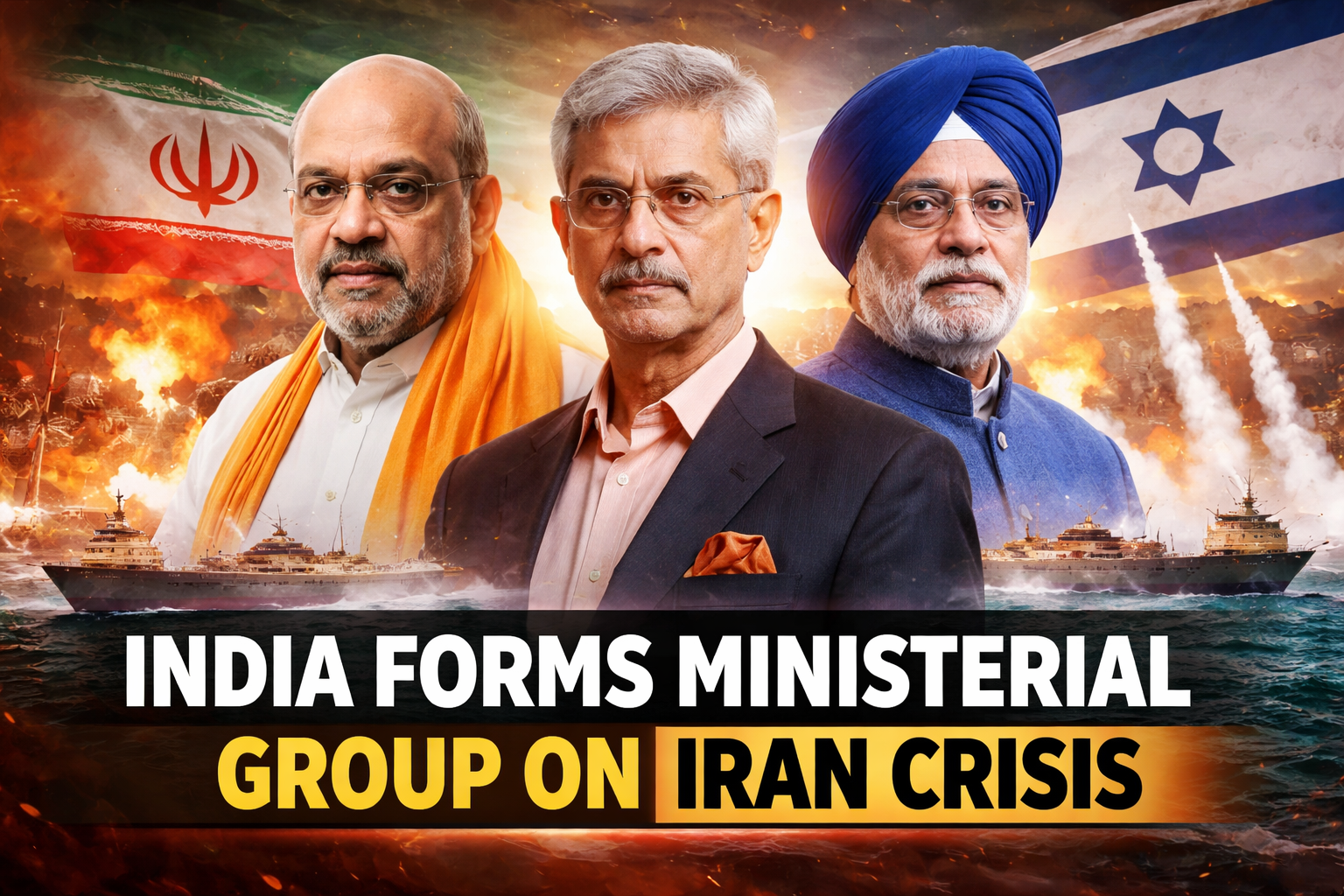
In line with keeping its national interests first, the Indian central government has formed a three-member ministerial group headed by Home Minister Amit Shah, External Affairs Minister S. Jaishankar and Petroleum Minister Hardeep Singh Puri.
Political Importance of the Ministerial Group
The constitution of this panel is politically and economically important to understand. Amit Shah is considered one of the most powerful leaders in the government. He is the former president of the Bharatiya Janata Party and currently serves as the Home Minister of India.
He is widely regarded as one of the most powerful politicians in the country, second only to Prime Minister Narendra Modi. Because of the immense confidence that the Prime Minister has in him, his leadership of this ministerial group makes the committee politically strong and influential.
Energy Crisis Concerns Behind the Committee
The composition of this ministerial group has been created in such a way that it can tackle a possible energy crisis that may emerge due to the ongoing conflict in West Asia.
India gets a large segment of its energy needs from countries in the Middle East. Any kind of instability there definitely creates a difficult situation for India. There are already concerns about shortages of petroleum products and LPG supplies if the conflict affects global oil supply chains.
Recently, global oil prices have also increased sharply. Reports suggest that oil prices per barrel have risen significantly, showing how sensitive global energy markets are to instability in the region.
Why the Strait of Hormuz Matters for India
One of the biggest concerns for India and the global economy is the situation around the Strait of Hormuz.
The Strait of Hormuz is one of the most important shipping routes in the world. A large portion of global oil shipments passes through this narrow waterway. If the supply chain is disrupted because of conflict or blockades, it can create serious economic problems for many countries.
For a country like India, which imports a large portion of its crude oil, such disruption can create a major economic challenge and affect energy security.
Diplomatic and Strategic Calculations
From a diplomatic and strategic point of view, this committee has been formed to balance foreign policy, energy needs, India’s national interests, and domestic economic conditions.
The Home Ministry looks after internal affairs and the overall situation within the country. The Ministry of External Affairs is responsible for diplomacy and international relations. Meanwhile, the Petroleum Ministry looks after the energy needs of the country and the energy infrastructure inside India.
Because of this, the framing of the committee is very important. Its constitution clearly reflects India’s concerns regarding the ongoing Iran–Israel conflict and its possible global impact.
Conclusion
Senior ministers and political leaders such as Amit Shah, S. Jaishankar and Hardeep Singh Puri are now directly involved in monitoring the situation and addressing India’s concerns regarding energy, security, and diplomacy.
With such senior leaders at the helm, the central government has indicated that it is closely watching every development related to this crisis.
For Indian citizens, the message from the government is clear: the situation is being monitored at the highest level, and every effort is being made to ensure that India’s interests do not suffer because of this global conflict.
Abhinay Shukla is the founder of TheIndicWay and writes on geopolitics, global affairs, and Indian strategic interests. He focuses on explaining international conflicts and their impact on India in a clear and analytical way.
FAQs
India has formed a three-member ministerial group to closely monitor and assess the ongoing conflict between Iran and Israel. The purpose of this group is to ensure that India’s national interests, energy security, and diplomatic position are protected during this global crisis.
The committee consists of three senior ministers of the government: Amit Shah, S. Jaishankar, and Hardeep Singh Puri. Each of them represents an important area such as internal security, diplomacy, and energy supply.
The conflict is important for India because the country depends heavily on the Middle East for its energy needs. Any instability in the region can affect oil supply, increase global oil prices, and create economic challenges for India.
The Strait of Hormuz is one of the most important shipping routes in the world for transporting oil. If this route is disrupted due to the conflict, it can affect global oil supply and create serious economic consequences for countries like India.
India’s approach remains focused on stability, peace, and diplomacy. At the same time, the government is ensuring that India’s energy needs, economic interests, and national security are protected during this ongoing crisis.