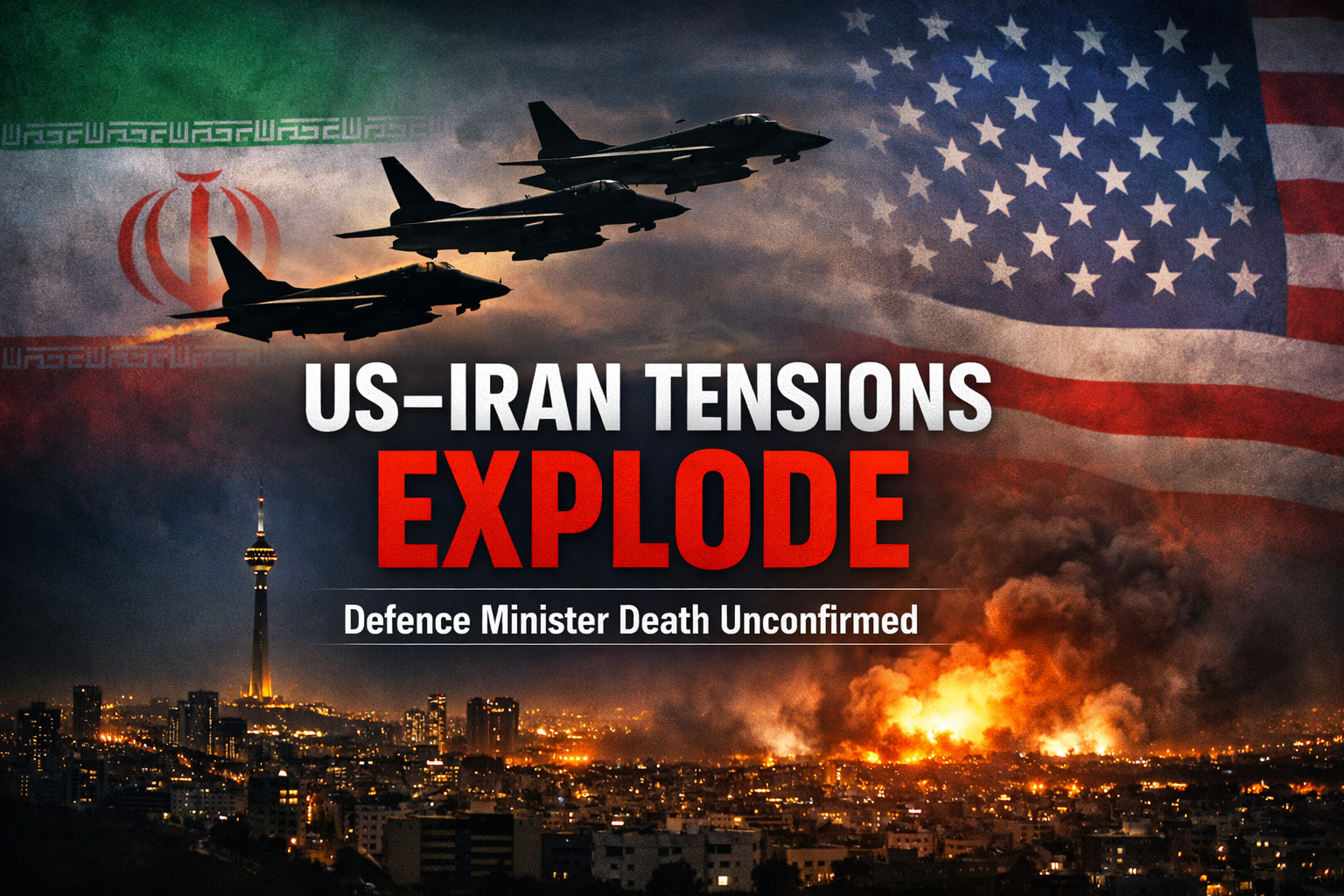
US Attacks Iran: Tehran and Key Military Centers Targeted; Iran Yet to Confirm Casualties as Conflict Rapidly Intensifies
Major Setback for Iran: US Attacks Iran Alongside Israel
In a major setback for Iran, the US attacks Iran alongside Israel in a large-scale military strike, targeting its most important centers. News is coming in that Iran has also targeted American military establishments in the UAE. This war is unfolding rapidly.
There has been no official statement from Iran about the strikes after the US attacks Iran in coordination with Israel. However, Israel and the United States have confirmed these strikes. According to reports, the strikes targeted Iran’s military infrastructure and other facilities often associated with nuclear or missile programs.
Reports on IRGC and Defence Minister
Unverified reports claim that Iran’s Defence Minister has died in one of the strikes. Senior IRGC commanders may have also been killed. Casualties are not confirmed yet, but estimates suggest around 200–300 people may have died.
The strikes reportedly targeted Tehran and other major Iranian cities, including centers of political power and military establishments. Reports suggest Defence Minister Amir Nasirzadeh and senior IRGC commanders may have been killed.
These reports are unconfirmed. Many channels claim high-ranking officials were targeted, but Iran has not confirmed any deaths of senior officials.
Escalating Conflict and Expert Analysis
The situation remains volatile and the conflict is escalating. If reports about the Defence Minister are true, this would mark a major political development.
Experts suggest this could escalate tensions between Iran and the United States. With Israel’s involvement, the conflict has become tripartite. Analysts suggest Iran might target military and civilian establishments in Israel and U.S. bases in the Middle East and Asia.
What Happened During US Attacks Iran
The United States and Israel launched coordinated military aerial strikes on Iran on Saturday. It was called a massive operation by President Donald Trump. He suggested a nuclear weapons threat, and the strikes targeted Tehran and other important cities.
People in Iran reported explosions in Tehran and several major cities. Unconfirmed reports suggested strikes near Supreme Leader Ali Khamenei’s residence.
Iranian Retaliation After US Attacks Iran
The Iranian Revolutionary Guards confirmed retaliatory drone and missile attacks on Israel and U.S. military installations.
Media reports suggest around 201 people were killed and over 700 injured in the strikes led by the U.S. and Israel. Around 80 people reportedly died at a girls’ school in southern Iran.
Iran retaliated against U.S. military camps in the UAE. Explosions and missile fire were reported in Bahrain, Saudi Arabia, Kuwait, and Qatar, targeting U.S. bases and naval headquarters.
Israel’s Perspective
Israel’s Prime Minister Benjamin Netanyahu announced signs that Iran’s Supreme Leader may have been attacked. Some claims suggested Khamenei is dead, but this is unconfirmed.
Netanyahu confirmed Israel targeted Khamenei’s residence and Revolutionary Guard facilities. He urged Iranians to flood the streets and “finish the job.” He added that operations would continue as needed for Israel’s security.
Diplomatic Developments
The White House confirmed that President Trump spoke with leaders from Saudi Arabia, Qatar, and the UAE, as well as the NATO chief, after the strikes.
The situation remains tense, with fears of wider escalation across the Middle East.
India’s Official Statement on US Attacks Iran
India issued its first official statement amid the crisis. The Ministry of External Affairs urged all sides to exercise restraint, avoid escalation, and prioritize civilian safety.
It emphasized that dialogue and diplomacy should de-escalate tensions and address underlying issues. The Ministry also stated that sovereignty and territorial integrity of all states must be respected.
India is monitoring the developments and the evolving crisis closely.
India’s Potential Role in Mediation
India is not a direct stakeholder, but it can mediate and broker peace. India has diplomatic leverage and maintains good relations with Middle Eastern nations and the Muslim world. It also has stable relations with Iran, Israel, and the United States.
India can present a nuanced stance. Amid these strikes and escalating warfare, it could take a constructive position for regional stability. Since the U.S. is engaged in the conflict, India can propose a versatile solution prioritizing safety, stability, and long-term peace.
Regional Instability in the Middle East and South Asia
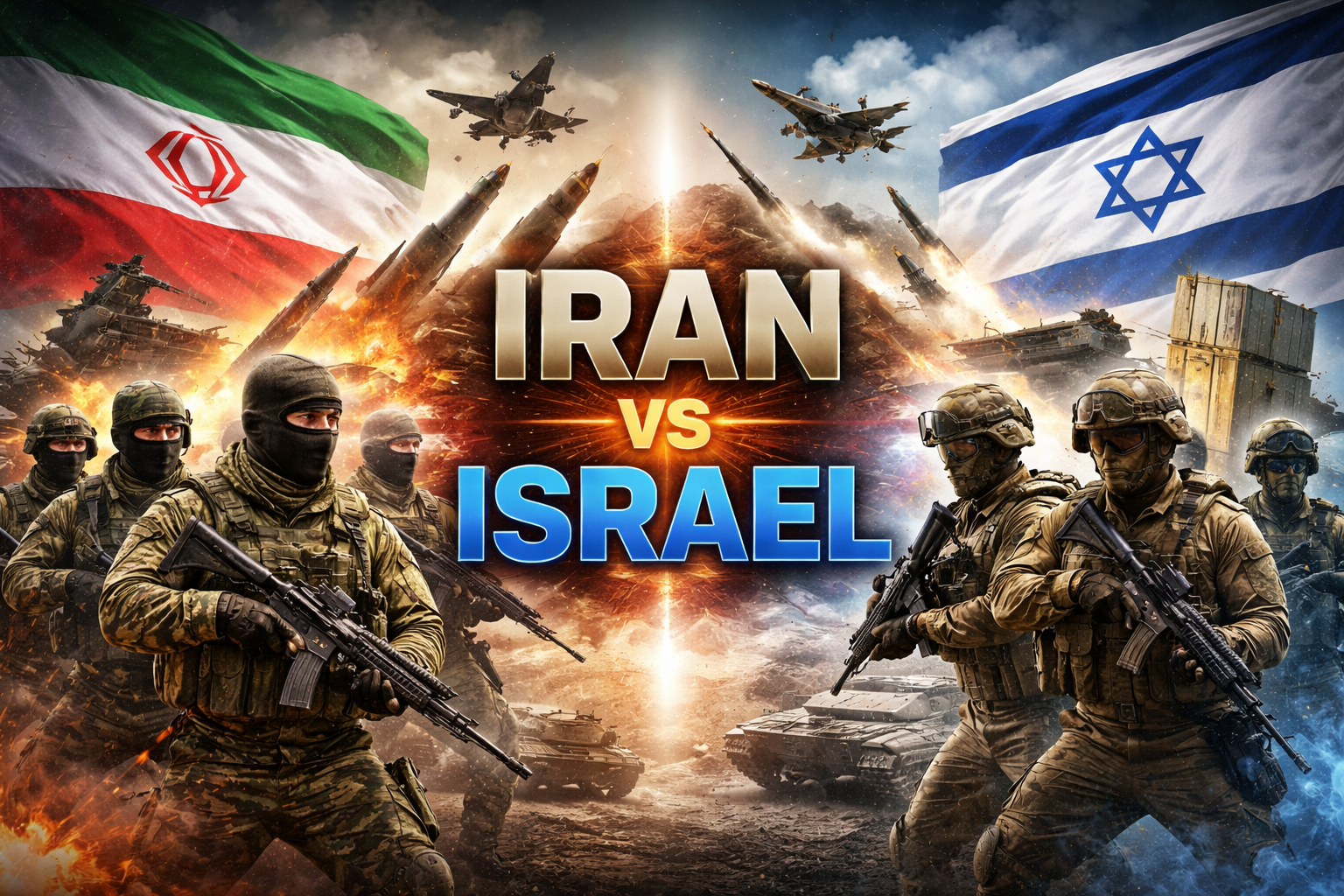
The Middle East and South Asian regions are grappling with crises—multiple crises at a time, including the Iran–U.S. conflict and the Iran–Israel conflict. On the other hand, there is the ongoing full-fledged war between Pakistan and Afghanistan, and additionally, skirmishes between various other nations in the Middle East.
India’s Unique Position for Stability and Diplomacy
The Middle East and South Asia are far more unstable than ever. India is the only big nation in the region that has somewhat stable relations with all the important countries and is not actively involved in any conflict at this point in time.
India as a Bipartisan Diplomatic Channel
Therefore, it is only fair to assume that only India can provide an alternative dialogue between the conflicting regions. India can also offer a diplomatic channel in a bipartisan manner, promoting stability and peace across South Asia and the Middle East.
Impact on Oil Prices and Fuel in India
The US attacks Iran could impact global oil prices. Iran is a major oil producer, and disruptions may affect global supply chains, pushing crude prices higher.
This would affect Asian countries, where fuel prices are already high. In India, any increase would impact citizens, raising transportation costs, food prices, and inflation.
The Indian government must secure alternative oil sources, strengthen strategic reserves, and maintain fuel price stability. Ensuring energy security and protecting citizens from price shocks must be a priority.
Abhinay Shukla is the founder of TheIndicWay, covering geopolitics, Indian culture, and global affairs. He writes sharp, insight-driven analysis focused on how international events impact India and its future.
FAQs on the Iran–U.S. Conflict and India’s Role
1. Why did the United States and Israel launch strikes on Iran?
The United States and Israel launched a coordinated military aerial strikes on Iran because there might be a threat of nuclear weapon, and they performed these strikes on Tehran and important cities of Iran.
2. What is Iran doing in response to the strikes?
The Iranian Revolutionary Guards have confirmed that they are retaliating with drones and missiles attack at Israel and US military installations.
3. How many people were affected in these strikes?
Across the Middle East region, media reports are suggesting that as many as 201 people have been killed in these strikes led by the US and Israel, while another 700 are injured. Reports from Iran say that around 80 people died at a girls’ school in southern Iran during these strikes.
4. What is India’s stance on the Iran–U.S. crisis?
India has urged all the sides to exercise restraint and avoid escalation and prioritize the safety of civilians. Dialogue and diplomacy should be pursued to de-escalate tensions and address underlying issues. Sovereignty and territorial integrity of all states must be respected.
5. How can India play a role in this regional conflict?
India is the only big nation here that has somewhat stable relations with all the important countries as well as it is not actively involved in any conflict at this point of time. Therefore, only India can provide an alternative dialogue between the conflicting regions, but India can also provide a diplomatic channel in a bipartisan manner.
After ali khamenei death people are celebrating it in iran. thanking donald trump for this action but i wonder after epstein file donald trump name was almost undersoil and people of usa was about to rid off but now people are celebrating and giving a cheers to him is this was a plane, action to clean him name or something else !!
This might be true Lavanya but Delhi must also take some form command over this. dont you think?